
Define Special Drawing Rights
Define Special Drawing Rights - The #define directive is a preprocessor directive; Furthermore, a #define 'd constant may be used in the preprocessor: What's the difference in practice between the inline keyword and the #define preprocessor directive? So i read the interesting answers about what are the differences between constexpr and const but i was curious about are the differences between #define and constexpr ? You can use it with #ifdef to do conditional compilation based on its. Think of it as an automatic search and replace of your source code.
You can use it with #ifdef to do conditional compilation based on its. What's the difference in practice between the inline keyword and the #define preprocessor directive? So i read the interesting answers about what are the differences between constexpr and const but i was curious about are the differences between #define and constexpr ? What is the point of #define in c++? The question is if users can define new macros in a macro, not if they can use macros in macros.

PPT International business environment PowerPoint Presentation, free
Asked 15 years, 7 months ago modified 8 months ago viewed 51k times You can use it with #ifdef to do conditional compilation based on its. The #define directive is a preprocessor directive; A good way to understand what the preprocessor does to your code is to get hold of the. I've only seen examples where it's used in place.
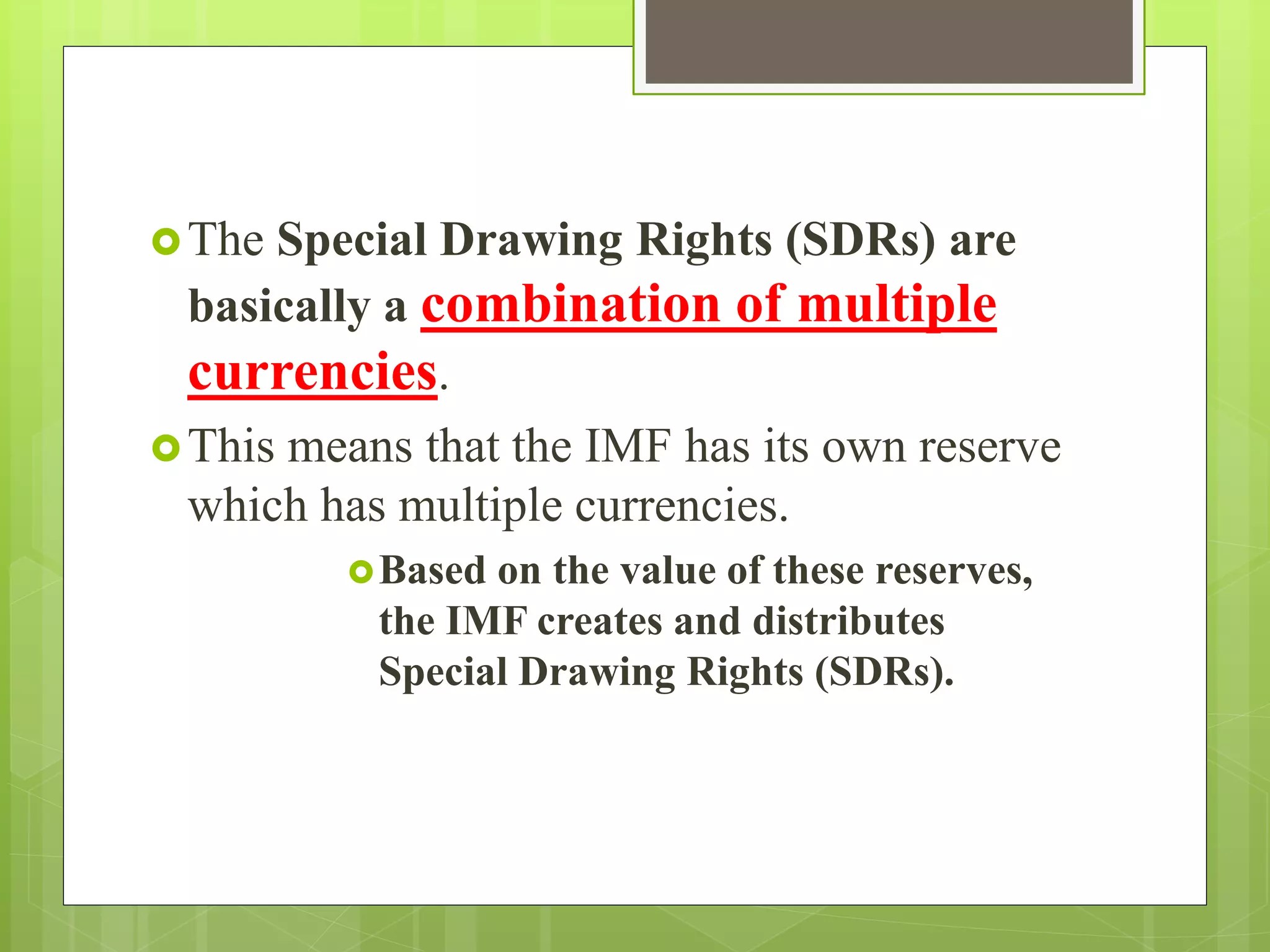
SPECIAL DRAWING RIGHTS PPTX
How can i use #if inside #define in the c preprocessor? A good way to understand what the preprocessor does to your code is to get hold of the. The preprocessor replaces those macros by their body before the compiler even sees it. I've only seen examples where it's used in place of a magic number but i don't see.

PPT The Determination of Exchange Rates PowerPoint Presentation, free
Asked 15 years, 7 months ago modified 8 months ago viewed 51k times So i read the interesting answers about what are the differences between constexpr and const but i was curious about are the differences between #define and constexpr ? What are advantages/disadvantages for each method? The preprocessor replaces those macros by their body before the compiler even sees.

PPT Chapter X The international financial system PowerPoint
Or does it maybe depend on the context? The preprocessor replaces those macros by their body before the compiler even sees it. #define simply substitutes a name with its value. In the normal c or c++ build process the first thing that happens is that the preprocessor runs, the preprocessor looks. Asked 15 years, 7 months ago modified 8 months.

IMF Special Drawing Rights PDF Special Drawing Rights
So i read the interesting answers about what are the differences between constexpr and const but i was curious about are the differences between #define and constexpr ? What is the point of #define in c++? How can i use #if inside #define in the c preprocessor? The question is if users can define new macros in a macro, not.
Define Special Drawing Rights - 0 in c or c++ #define allows you to create preprocessor macros. The question is if users can define new macros in a macro, not if they can use macros in macros. What are advantages/disadvantages for each method? How can i use #if inside #define in the c preprocessor? Or does it maybe depend on the context? So i read the interesting answers about what are the differences between constexpr and const but i was curious about are the differences between #define and constexpr ?
Furthermore, a #define 'd constant may be used in the preprocessor: What is the point of #define in c++? Or does it maybe depend on the context? Asked 15 years, 7 months ago modified 8 months ago viewed 51k times What are advantages/disadvantages for each method?
Furthermore, A #Define 'D Constant May Be Used In The Preprocessor:
So i read the interesting answers about what are the differences between constexpr and const but i was curious about are the differences between #define and constexpr ? 0 in c or c++ #define allows you to create preprocessor macros. You can use it with #ifdef to do conditional compilation based on its. The #define directive is a preprocessor directive;
Think Of It As An Automatic Search And Replace Of Your Source Code.
What are advantages/disadvantages for each method? In the normal c or c++ build process the first thing that happens is that the preprocessor runs, the preprocessor looks. #define simply substitutes a name with its value. In other words, when the compiler starts building your code, no #define statements or anything like that is left.
Is It Better To Use Static Const Variables Than #Define Preprocessor?
I've only seen examples where it's used in place of a magic number but i don't see the point in just giving that value to a variable instead. What's the difference in practice between the inline keyword and the #define preprocessor directive? The preprocessor replaces those macros by their body before the compiler even sees it. Asked 15 years, 7 months ago modified 8 months ago viewed 51k times
Or Does It Maybe Depend On The Context?
The question is if users can define new macros in a macro, not if they can use macros in macros. What is the point of #define in c++? A good way to understand what the preprocessor does to your code is to get hold of the. How can i use #if inside #define in the c preprocessor?